20 Recommended Facts For Deciding On Termite Control Services In Jakarta
Wiki Article
Javanese Wooden: Preserving Heritage Structures
Every heritage building has two stories about Jakarta. The first is inscribed in carved teak and colonial-era joinery--craftsmanship that has survived earthquakes, regime changes, and a century of tropical rainfall. The second story, written in mud tube, frass and a hollow echo resulting from termites from a wood that were transformed into veneer is narrated by the mud tubes, frass, and the hollow echo. Preserving Javanese wood in heritage structures is not museum work; it is forensic intervention. The materials used are often not as durable and authentic as the ones that have been romanticized. Subterranean termites could prefer timber that is historically authentic. Heritage contracts require that work to prevent termites is done with the help of species identification and heartwood verification. They also require preservation methods that don't remove the colonial, pre-colonial and construction stories that are woven into the grain.
1. Teak sold today does not contain the Heritage Teak.
Javanese teak from old growth that was harvested between 40 to 60 years old has silica as well as oils that keep termites from consuming. The plantation teak that is that is harvested between 15 and 20 years is free of both. A lot of heritage structures in danger of failing today do not fail because the wood used originally degraded, but rather because repairs carried out in the twentieth century used teak immature which termites can recognize. To ensure that replacement wood is resistant to termites, it is essential for pest control professionals to test it before installation.
2. Heartwood Contrasting with Sapwood and the Invisible Durability Gap
A single timber could have two levels of durability. Mahoni sapwood is highly vulnerable. Nangka heartwood is the second lowest rating (Class II); nangka Sapwood is rated Class V, which is the lowest. If heritage restoration contractors use wood types, but do not specify heartwood manufacturing only they will install termite-resistant materials in structures that have lasted for years due to their old growth resistant. Anti-termite services should seek out core samples prior to approving restoration wood.
3. Bamboo Preservation is a reality, but it Requires Immersion
Bamboo that was not treated was the root of the outbreak of plague in Java. Bamboo isn't an issue, it's just untreated bamboo. Tobacco-stalk vinegar, which is applied via chill-soaking for 24 hrs, followed by soil drenching, has the ability to reduce termite damage to the bamboo by 30 percent in 18 months. Bamboo structures with historical importance can be preserved only with applying a surface brush. Immersion infrastructures are required.
4. Colonial-Era Repairs are Not Genuine Javanese Wood
Dutch plague officers had to rebuild 1.6 million Javanese homes between the years of 1911 and 1941 using criteria based more on criteria for epidemiology than cultural continuity. The thing that is commonly called the original Javanese vernacular architecture is in fact the colonial public health infrastructure. Anti-termite inspectors who inspect heritage structures should distinguish between precolonial joinery and Dutch mandated substitutions. considering them to be equivalent is a mistake in both preservation philosophy and termite risk assessment.
5. Soursop Leaf Extract Works at 25% Concentration
The cold-soaking of durian and coconut lumber in a 25% soursop leaves extract solution reduces weight loss mediated by termites to below five percent, which is an accepted commercial resistance classification. This is not folk medicine; it is concentration-dependent, replicable, and requires no synthetic chemistry. Jakarta exterminators who serve clients with a heritage are encouraged to partner with facilities that are able to provide treating with immersion. They should also certify extract concentrations in treatment documentation.
6. SNI Class II Is Not "Termite Proof"
Even though Class II Indonesian National Standard wood is categorized as "resistant", it still has a 6-to-10-percent weight loss when compared to Coptotermes curvevignathus. Heritage preservation contracts that specify "Class II or better" without any additional intervention are willing to accept measurable consumption. In the case of irreplaceable parts physical barriers, as well as non-repellent enticements must be added to the wood.
7. Agathis Timber and Durian Timber - Heritage Liabilities
Agathis dammara was widely used in colonial Javanese furniture as well as interior joinery. Central Java has many heritage structures constructed of Durio Zibethinus. According to standardized testing the two species were rated Class V (very poor resistance). Exterminators must flag the species right away for prior monitoring. A built agathis door frame isn't a preservation asset. It's a feeding station for termites dressed in period costume.
8. Moisture content is a factor in determining detectability
No matter the species of wood or classification, termites cannot detect moisture less than 12 to 15 percent. The foundations of historic structures leak, and lack damp-proofing courses. If anti-termite treatments are applied to timber from the past prior to dealing with the drainage of roofs, downspout discharge or capillary water that flows through masonry, they apply expensive preservation products that termites already have mapped.
9. The 1911 Archive Is Available and Searchable
More than 300 images of Javanese homes from 1911 to 31 are stored in the archives of the University of Cambridge, as well as Dutch colonial archives. They provide the materials used in the construction as well as historical repairs and region-specific jointing. These aren't merely academic musings they are forensic resources. Heritage exterminators who study the photographic archives prior to making recommendations for treatment can differentiate original fabric from subsequent substitutions and alter risk assessment in line with.
10. Preservation through Treatment Not Replacement
The Dutch colonial precedent proves that at a continental scale that material substitution can result in houses that have a questionable authenticity. They also have questionable termite resistant. Preservation of heritage is not enhanced by cutting out original timber and putting in plantation wood. It's more moral and financially feasible to protect the wood through treatment. This may include immersion into natural products as well as baiting of irreplaceable material and retrofits of physical barriers that do not require foundation excavation. Anti-termite providers that are positioned as preservation partners instead of replacement contractors will earn architects' specifications and owners' trust.
The article's conclusion is:
Javanese wood conservation is not a niche specialty it's the primary termite-control technique that was employed long before the advent of synthetic pesticides. The 25 percent threshold for soursop extraction, 18-month bamboo-vinegar protocol, and heartwood-verification requirement aren't substitutes for professional termite control. Instead, they're traditional methods of professional extermination. Jakarta anti-termite service providers seeking heritage contracts must invest in an immersion infrastructure and purchase essential sampling equipment and instruct inspectors on how they can differentiate colonial plague housing from pre-colonial vernacular structures. The wood cannot be substituted. The knowledge needed to preserve this wood is still available, it's just not fully operational yet. Conservators and homeowners are willing to spend more money for services that incorporate this ability. The market exists. It's a matter of choosing which exterminators to hire. Check out the best jasa pembasmi rayap for website tips including pembasmi hama, pintu anti rayap, jasa anti rayap surabaya, harga anti rayap, cara membasmi rayap di lemari, anti rayap untuk kayu, cara basmi rayap, jasa pembasmi hama, anti rayap terbaik, kayu yg tidak dimakan rayap and more.
Soil Treatment Protocols In Greater Jakarta
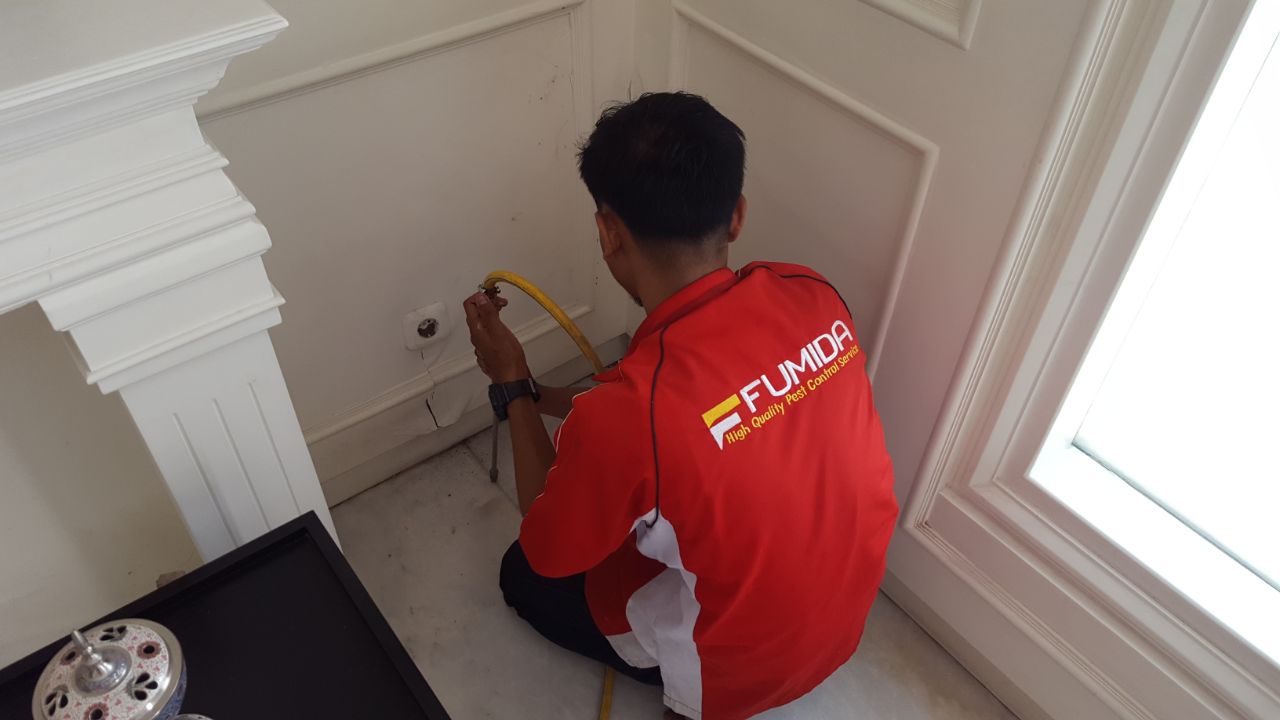
The trench is dug. The rod then put in. The chemical is injected. Technicians repeat the procedure after moving sixty centimeters. The ritual, which is that is performed throughout Greater Jakarta tens of thousand of times a year is thought to be a method that has been verified by homeowners as well as exterminators. It's not. It is a tradition which has been disguised as an official protocol. Soil treatment for subterranean termites originated in temperate climates with diverse soil textures, various conditions of moisture, and a variety of target species. Tranplanted onto Jakarta's silty silt clay, monsoon precipitation and Coptotermes geostroi's habits of foraging The traditional "trench-and-drench" produces results that differ from temporary suppression to complete futility. Greater Jakarta must have soil treatment protocols that are calibrated in accordance with the conditions of Greater Jakarta. The following 10 points will help distinguish chemical application which merely creates bill lines, and treatment that actually eliminates termites.
1. Soil Texture Describes Chemical Mobility
The soil in Jakarta is mostly compacted silty mud. Size of particles are tiny. Organic content is very low. The porosity is low. On this surface, liquid termiticides don't disperse in a radial pattern like they would in sandy or loamy sands. Instead, they pool and then move along preferred routes such as cracks, utility ditches, and the root channels. Pesticides who think they're uniform in distribution, are deluded. Validation of post-applications requires soil samples and not blind trust.
2. The 300-500mm Moisture Belt Determines Placement
The roof eaves shield the soil directly adjacent to the foundation walls. The soil is not able to receive much rain. It is drier than open garden soil. The termite activity of foraging is concentrated in the region between 300 and 500 millimeters from the structure, close enough to reach the foundation, but far enough to receive water. Soil treatments which are applied flush to the wall will miss this belt. Effective protocols place the trench on the drip line, not the foundation line.
3. The Half-Life of Hydrolysis can be measured in weeks rather than months.
Hydrolysis breaks down fipronil imidacloprid, and bifenthrin. Moisture and temperature increase the hydrolysis rate. Jakarta's shallow depth soil temperatures range between 28 and 32degC. In the majority of cases the soil's moisture levels exceed 20 percent during wet seasons. In this situation, the half-life of chemical products is reduced. In Bekasi, a product labelled for twelve months efficacy remains effective after about four months. The warranty should be able to reflect this. Most do not.
4. Vertical Barriers require Horizontal Disruption
Termites enter soils and foundations via the contact. Soil treatment only creates the vertical barrier to chemical if chemical is present at the surface. The surface injection of rods releases chemical, but it does not treat the initial 5-10 centimeters. Exterminators that punch rods down to the subsoil, and then lift them up, immediately treat the subsoil and leaving the topsoil undisturbed.
5. C-Organic content bonds and inhibits
Soil organics can absorb non-repellent termiticides. This reduces the amount of termiticides available to termites. The Jakarta urban areas are low levels of organic carbon. However, landscaping plants close to foundations are awash with a great deal of potting soil and compost. For soil treatment, increased rates are required to break down organic binders in these zones. The standard label rates are based upon mineral soils that have not been modified.
6. Pre-treatment Moisture Audits Are Non-Negotiable
The soil's water content higher than 22% could create a preferential habitat. The soil's water content of less than 10% hinders foraging and decreases chemical pickup. Exterminators who inject terminicide without measuring the current soil moisture are applying chemicals under unspecified conditions. The moisture meter cost two hundred thousand rupiah. The first retreatment due to inadequate conditions for application costs 10 times that.
7. The volume of the trench must be in line with the label Rate, Not Linear Meter
Indonesian soil treatment quotations are generally cost per linear meters. The label instructions specify the volume and concentration per units of area or linear meters for specific trench dimensions. Pest control companies that sell compliance documents instead of treatments are those who provide a quote per square meter. The volume of chemical required to treat a 15cm by 15cm trench is less than half the amount needed to treat trenches 30cmx30cm. The price differential rarely reflects the fact that.
8. Rodding Versus Trenching: Specific Choice
Coptotermes gestroi grazes in the soil's top 15cm to 20cm. Microtermes insperatus forages deeper, and accessing the moisture in dry seasons via vertical shafts. Rod injection deposits chemical at depth, intercepting Microtermes. Trenching and mixing deposits chemical across the upper surface to stop the flow of Coptotermes. Species identification must precede protocol selection. Exterminators who use the same soil treatment in every instance are nearly all the time not matched to Jakarta's species diversity.
9. Re-treatment Intervals Are Shorter Than Marketing Claims
Indonesian pesticides are highly competitive. To increase sales, the warranty period has been extended. Soil treatment is often covered by guarantees of three years. The field conditions under Jakarta conditions supports twelve to 18 months of significant exclusion, then gradual depletion of chemical and edge penetration. Homeowners who have termites in their houses by month 22 are not unusual; they're adhering to the program. Customers are re-engaged by exterminators who honor their warranties until month 22 without arguing about coverage. Pest control companies who dispute coverage lose clients.
10. Post-treatment soil sampling is the Only Verifiable Quality Control
The exterminator claims that the trench was dug to the proper depth and chemically diluted to the appropriate concentration, injected at the correct pressure and distributed equally. The homeowner is unable to verify. Soil cores that are analyzed for concentration of active ingredients provide confirmation. This service is offered. The service is accessible. Jakarta anti-termite companies that order soil samples from a third party and then share their findings with customers are differentiating themselves by proving. Services that deny soil sampling differentiate themselves by faith. The market is now increasingly looking for evidence.
Conclusion
Because they are well-known and accepted, soil treatment methods within Greater Jakarta continue to be employed. But, being familiar doesn't mean that they are effective. To disperse the equal amount of chemicals, the city's silty mud that has been compacted needs a larger trench. Because of its monsoon climate that causes hydrolysis, its timelines are compressed. This results in shorter warranty times as well as more frequent retreatment cycles. The species composition of the assemblage calls for differentiating the protocol based on pre-treatment identification. Landscape planting beds may require increased rates of organic carbon and an adjustment to the organic carbon. Its foundation geometries require trench placement at the drip line, not the wall line. Jakarta anti termite services that continue to perform soil treatment following the specifications of the companies that were designed for Ohio Texas Osaka guarantee suboptimal results. The manufacturer is not responsible for the outcomes and the exterminator's responsibility is. The process of adaptation is dependent on investments in soil-moisture meters, core samples, relationships with analytical laboratories, as well as the training of technicians on species identification. In a mature market these investments are vital. This is the fee to be a part of the market that is maturing. Homeowners of Greater Jakarta are able to differentiate between exterminators who have paid the entry fee and those who haven't. This is evident by the homeowners who choose to accept higher prices from the first bidder and decline lower ones from the other. Read the top rated anti rayap jakarta for more tips including rayap lemari, pembasmi rayap, jasa pembasmi rayap, anti hama, jasa pengendalian hama, jasa pembasmi rayap, jasa pest control, jasa anti rayap jakarta, penyebab rayap di lemari, anti rayap terbaik and more.
